As an Amazon Associate, we earn from qualifying purchases. Some links on this site are affiliate links at no extra cost to you. Our recommendations are based on thorough research and editorial judgment.

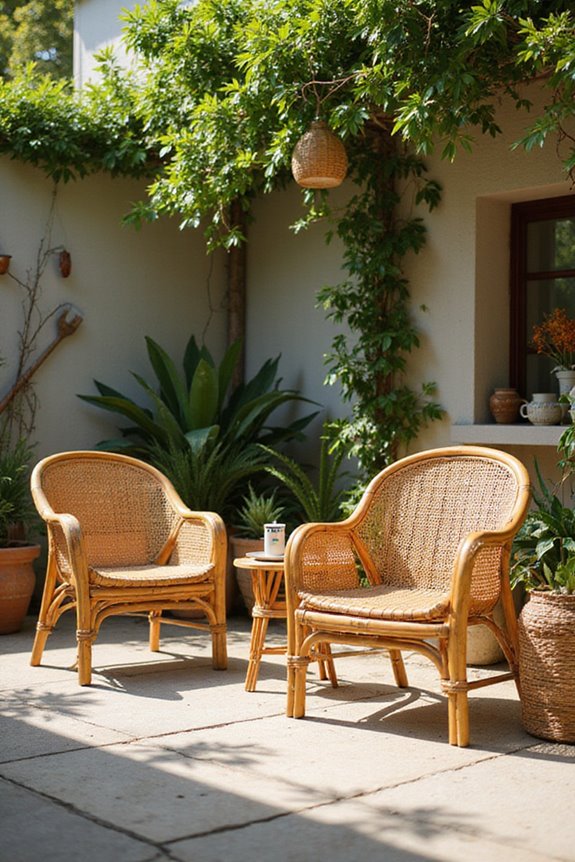
Bamboo Vs Rattan Chairs?
When we compare bamboo and rattan chairs, each material offers unique benefits. Bamboo is lightweight, durable, and weather-resistant, making it ideal for outdoor use. Rattan, though flexible for intricate designs, is more suited for indoor settings and requires maintenance to prevent damage. Bamboo chairs feature a modern, minimalist look, while rattan’s woven texture adds warmth. If you’re seeking the best option for your space, our detailed analysis can guide your decision further.
Key Takeaways
- Bamboo chairs are lightweight and strong, making them suitable for heavy loads and outdoor use due to their weather resistance.
- Rattan chairs offer natural flexibility, allowing for intricate designs and better weight distribution, enhancing overall comfort.
- Bamboo features a clean, modern aesthetic ideal for minimalist designs, while rattan provides a warm, organic look perfect for tropical themes.
- Rattan chairs require more maintenance outdoors due to moisture susceptibility, whereas bamboo chairs generally last longer with less care.
- Combining bamboo and rattan in chair designs can create unique hybrid pieces, blending durability with intricate aesthetics.
Material Composition and Structure
When we compare bamboo and rattan chairs, it’s important to understand their material composition and structure. Bamboo is a type of grass with hollow stems, allowing it to be lightweight yet strong. Its growth characteristics enable it to thrive in various climates, making it a sustainable choice. In contrast, rattan is a solid vine with a rough texture from its fibrous outer layer. It grows slowly in tropical rainforests, requiring specific conditions for cultivation.
Here’s a quick comparison of their material properties:
- Bamboo:
- Hollow structure
- Smooth surface
- Rapid regrowth
- Solid stem
- Rough texture
- Limited growth areas
Both materials offer unique advantages for furniture-making, with bamboo also being recognized for its eco-friendly construction that contributes to a sustainable lifestyle.
Strength and Flexibility

Understanding the strength and flexibility of bamboo and rattan chairs is essential for choosing the right furniture. Bamboo is known for its high compressive strength, making it excellent for heavy loads. However, it’s rigid, which limits its ergonomic design potential. Rattan, on the other hand, is naturally flexible, allowing for intricate shapes and better weight distribution. This flexibility enhances comfort, supporting our bodies more naturally. Additionally, bamboo furniture is a sustainable material that contributes to a greener lifestyle.
- Bamboo:
- Solid and stiff
- Great for stable support
- Flexible and resilient
- Ideal for ergonomic designs
Recommended Products
Designed for Cozy Gatherings & Daily Lounging: Create your perfect outdoor living room for family leisure, morning coffee, parties, BBQs or poolside game. The conversation set offering flexible arrangements for any space, backyard, balcony, garden, porch, deck, poolside patio and sunroom. LED solar lights table creates magical ambiance, features built-in solar panels that automatically charge by day and emit warm light at night
Elevated Comfort with Cane Back Craftsmanship: Enjoy ultimate comfort with our ergonomic swivel dining chairs. Featuring contoured wood and a breathable cane back, they promote good posture, reduce discomfort, and complement any decor with a stylish walnut finish
Handcrafted Natural Real Bamboo Rattan: High-quality cane back hand-woven by artisans, natural texture, excellent breathability, cool for long sits, these wood and rattan dining chairs combining high quality and natural beauty
Durability and Weather Resistance

Durability and weather resistance are key factors to contemplate when choosing between bamboo and rattan chairs for our homes or outdoor spaces.
- Bamboo Durability: Bamboo is inherently strong, lasting between 5-7 years to several decades with proper care. Its dense structure withstands weather exposure, making it suitable for outdoor use.
- Rattan Durability: Rattan, while durable indoors, struggles outdoors. It can crack and degrade when exposed to moisture and sunlight without proper treatment.
- Weather Resistance: Bamboo is naturally more weather-resistant, repelling humidity and rain. In contrast, rattan requires frequent maintenance to prevent rot and brittleness. Additionally, bamboo’s rapid renewability and eco-friendly manufacturing processes contribute to its sustainability as a material choice for outdoor furniture.
To guarantee longevity, we must prioritize maintenance for both materials, but bamboo generally offers better durability factors for our outdoor needs.
Recommended Products
FRENCH STYLING: Bring the feel of Paris to your home or business with this set of four commercial grade classic french inspired bistro chairs with subtle details that blend well into most design schemes
Designed for Cozy Gatherings & Daily Lounging: Create your perfect outdoor living room for family leisure, morning coffee, parties, BBQs or poolside game. The conversation set offering flexible arrangements for any space, backyard, balcony, garden, porch, deck, poolside patio and sunroom. LED solar lights table creates magical ambiance, features built-in solar panels that automatically charge by day and emit warm light at night
✔360° Swivel and Glide: This 4 Pieces outdoor wicker swivel rocker chair has the dual function of swivel and glide back and forth, when you sit on this patio swivel rocker chair you will experience a different kind of comfort.
Geographic Origin and Growth

Geographically speaking, bamboo and rattan have distinct origins that influence their growth patterns. Bamboo thrives mainly in Asia, with rich habitats in India, China, and Indonesia. It prefers tropical and subtropical climates, growing vigorously across diverse zones. For instance, India boasts around 11.4 million hectares of bamboo habitats, showcasing its incredible variety.
On the other hand, rattan is found primarily in Southeast Asia’s humid tropical forests, such as those in Indonesia and the Philippines. It grows as a climbing palm, relying on forest canopies for support. Rattan ecosystems are less widespread than bamboo’s, focusing on areas with dense, mature trees. Together, these plants reflect the unique ecological environments they inhabit, shaping their growth and availability.
Uses in Furniture and Design

When we look at furniture design, bamboo and rattan serve unique roles that cater to various styles and preferences. Bamboo typically embodies minimalist styles, featuring clean lines and a vintage feel. On the other hand, rattan offers flexibility, allowing for intricate and curvy designs that enhance Boho or coastal aesthetics.
- Ergonomic Design: Rattan chairs often have better ergonomic shaping for comfort, making them perfect for cozy spaces.
- Textural Contrast: Combining bamboo and rattan creates appealing textural contrast without overwhelming a room. Additionally, bamboo’s natural wood grain texture adds warmth and character to any design scheme.
Both materials work well indoors and in covered outdoor areas. Adding cushions can increase comfort while complementing the overall decor. Embracing both materials allows us to create inviting, stylish environments that reflect our unique tastes.
Recommended Products
Elevate your space with the timeless charm of ourFrench rattan bar stools, perfect for both indoor and outdoor use.
【Elegant French Design】The outdoor bar stools exude timeless elegance with their classic design inspired by French provincial aesthetics. Featuring exquisite patterns, graceful curves, and refined detailing, these stools add a touch of sophistication to any space.
Bicolor Hand-Woven : Harmonious two-tone match, elegant charm, perfect for any space,ideal for both residential and commercial spaces.
Sustainability and Environmental Impact
Sustainability and environmental impact are essential factors to take into account when choosing furniture materials. When we look at bamboo, it reaches maturity in just 3-5 years, making it a highly renewable resource. Its sustainable harvesting practices allow continual regrowth, minimizing ecosystem disruption. Rattan, on the other hand, can also be sustainably harvested but requires careful management to avoid overharvesting.
Here are some key points to reflect on:
- Environmental Benefits:
- Bamboo contributes to carbon sequestration due to its rapid growth.
- Rattan supports forest biodiversity, maintaining habitats.
- Both materials break down naturally, reducing landfill waste.
Choosing bamboo or rattan means making a positive impact on our environment while enjoying beautiful furniture. Additionally, selecting renewable resources like bamboo promotes sustainability and helps reduce environmental harm.
Aesthetic Appeal and Style
Aren’t we all drawn to the beauty of well-designed furniture? When it comes to aesthetic appeal, bamboo and rattan chairs offer distinct styles that cater to our diverse aesthetic preferences. Rattan features smooth surfaces and intricate weaves, perfect for tropical or bohemian themes. Its flexibility allows for flowing, organic shapes that invite warmth into our spaces. On the other hand, bamboo boasts a clean, modern look, with its straight lines and natural grain emphasizing minimalist design trends.
- Rattan:
- Intricate patterns
- Warm, inviting ambiance
- Angular, sleek profiles
- Bright, airy feel
Combining both materials can create unique hybrid pieces that enhance our home’s overall style. Additionally, understanding the comfort and ergonomics of bamboo and rattan chairs is essential for selecting the perfect seating for your home.
Recommended Products
Frame made of water hyacinth and natural rattan.
Durable Aluminum Frame with Bamboo Finish: This bistro chair set is made of a powder-coated bamboo finish aluminum frame, creating a lightweight and stable frame
Chic French Style: With a classic color scheme and elaborately carved decorative motifs. Elegance meets a rustic country touch to making you feel as if you are in the French countryside.
Cost and Maintenance Considerations
Cost and maintenance are essential factors to take into account when choosing between bamboo and rattan chairs.
- Price Differences
- Bamboo generally costs less due to easier harvesting methods.
- Rattan is more expensive, reflecting the labor-intensive craftsmanship involved.
- Price variability exists based on quality, design, and region.
- Bamboo needs less frequent maintenance but requires protective finishes to prevent damage.
- Rattan demands regular care to avoid brittleness and wear, especially indoors.
- Both materials need cleaning and protection from harsh weather to last.
Ultimately, bamboo offers a budget-friendly option with lower maintenance, while rattan provides unique designs at a higher price and upkeep commitment.
Recommended Products
【Breathable Comfort】Sink into luxurious 6-inch back cushions and 4-inch seat cushions, engineered for premium comfort. The high-performance, weather-resistant fabric promotes airflow to prevent sticking and overheating, making these chairs ideal for extended lounging on hot summer days.
1. Patio Chairs Set Details: Belord outdoor patio chairs set of 2 includes hand-woven brown wicker patio chairs with navy blue cushions. The seat surface measures L24 x W22 inches, with a seat height of 17.9 inches. Each chair weighs 30 pounds, making them perfect as outdoor wicker chairs for porches, balconies, or backyards.
【NATURE PATIO DINING Chair】This outdoor dining chair from the Healing Chic collection will provide a comfortable space for your party. Fashionable rattan and smooth lines complement almost any home or landscaping theme. Perfect for outdoor garden, balcony, patio, porch, poolside and yard.
Frequently Asked Questions
Which Is More Comfortable for Long Sitting Periods?
We’ve all experienced that moment when a chair feels like a warm hug. For long sitting periods, rattan’s ergonomic design and cushion support truly shine, offering a comforting embrace that bamboo simply can’t match.
How Do Climate Conditions Affect Chair Performance?
We all know climate impact plays a significant role in material durability. Depending on humidity, heat, or UV exposure, our chairs can either thrive or suffer, reminding us of the importance of proper care and maintenance.
Can Bamboo and Rattan Be Recycled?
We’ve found that both bamboo and rattan can be recycled, but it depends on local recycling processes. Embracing sustainable practices, we can guarantee these materials are properly handled, minimizing waste and enhancing our environmental impact together.
Are There Any Health Concerns With These Materials?
When considering health concerns, we should be aware that untreated bamboo and rattan are generally safe. However, treated products might contain toxic chemicals, potentially triggering allergic reactions. Let’s prioritize natural options for our well-being.
What Is the Weight Limit for Each Type of Chair?
We can’t help but feel like giants when discussing weight capacity! The durability comparison reveals that our favorites range from 220 to a whopping 400 pounds, ensuring we all find a chair that suits our needs perfectly.