As an Amazon Associate, we earn from qualifying purchases. Some links on this site are affiliate links at no extra cost to you. Our recommendations are based on thorough research and editorial judgment.
How To Water Container Gardens in 2026?

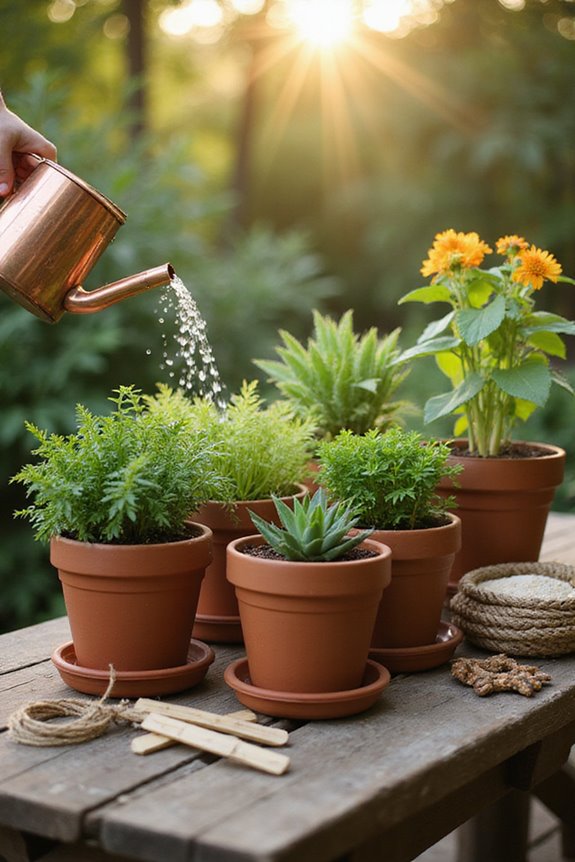
To water container gardens effectively, we should first know when to do it. During cooler temps, we’ll water 2-3 times a week, but in hot weather, it increases to 3-5 times. We need to water deeply, making certain moisture reaches 12–18 inches. Early mornings are the best for watering, while early evenings are okay as long as we avoid soaking leaves overnight. By following these guidelines, we can enhance plant health and guarantee proper hydration. There’s more to explore about watering techniques and tools.
Key Takeaways
- Water container gardens 2-3 times a week in cooler temperatures, increasing to 3-5 times during hot weather.
- Water deeply to reach the root zone, ensuring moisture penetrates 12-18 inches before stopping when water drains from holes.
- Use early morning for watering to enhance moisture absorption and prevent fungal issues from wet leaves overnight.
- Employ drip irrigation or olla pots for efficient water delivery and to promote deeper root growth.
- Monitor plants regularly, adjusting watering frequency based on seasonal changes and environmental conditions.
Understanding Watering Frequency and Timing
You may be interested
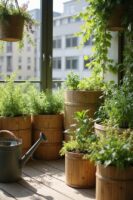
When it comes to watering container gardens, understanding frequency and timing is essential. Our watering schedules need to adapt based on temperature and plant needs. In cooler temperatures, we typically water 2-3 times a week; however, when it gets hot, we may need to water 3-5 times weekly.
Timing also plays a key role in moisture retention. Early morning is ideal for watering, letting plants absorb water before the heat sets in. Early evening works too, but we should avoid soaking leaves overnight to prevent fungal issues.
Using these guidelines helps us keep our plants healthy. Let’s monitor our containers regularly and adjust watering based on their specific needs. Consistency is crucial for thriving container gardens.
Mastering Watering Technique and Depth
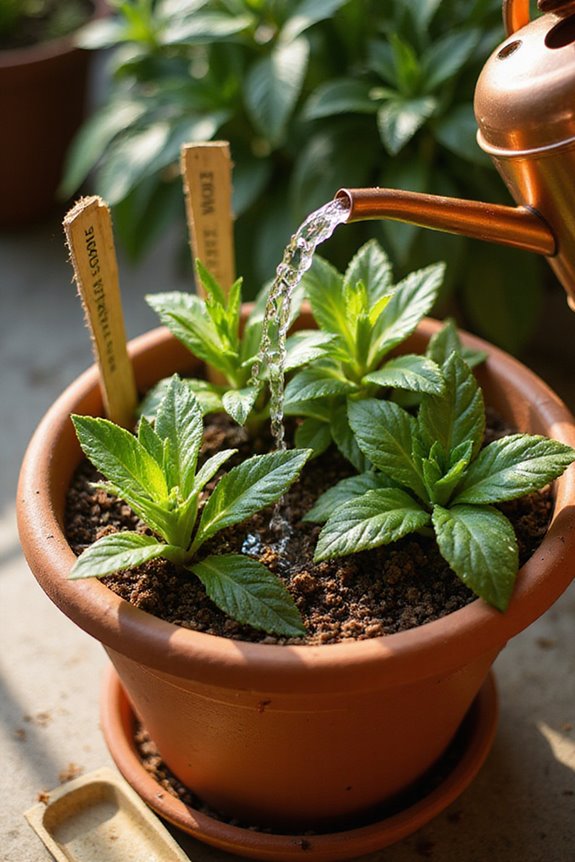
Mastering the right watering technique and depth is essential for the health of our container gardens. We should focus on effective watering strategies that reach the entire root zone. To do this, we must water deeply enough so that moisture penetrates at least 12–18 inches, depending on the plants we’re growing.
Stopping when water begins to run out of drainage holes helps guarantee saturation rather than just surface wetting. Using slow, steady methods minimizes runoff and allows the soil to absorb water fully.
Targeting water delivery at the base of our plants prevents excess moisture on foliage, reducing disease risks. By employing tools like drip emitters or watering spikes, we can efficiently concentrate moisture where it’s needed most.
Preparing Soil and Containers for Optimal Drainage
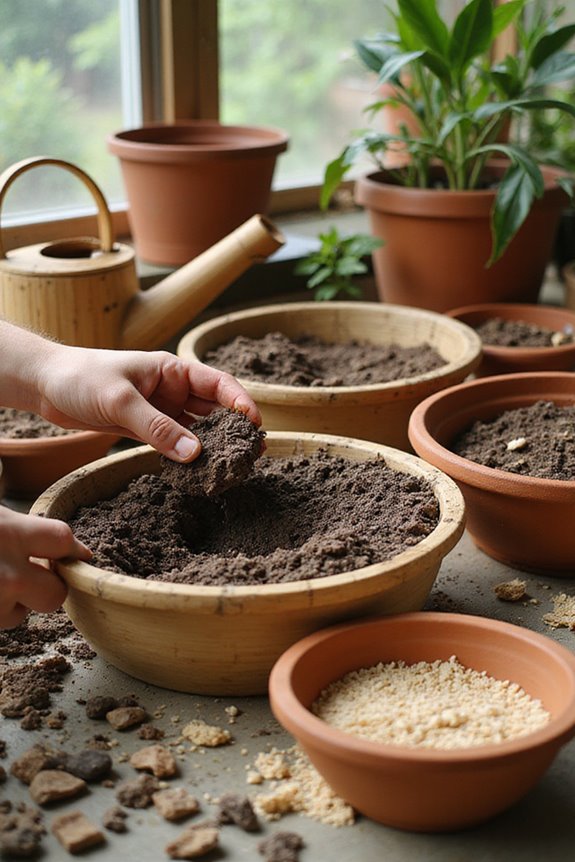
Preparing the soil and containers for ideal drainage is crucial for the success of our container gardens. First, we need to choose the right container materials. Porous options like clay absorb moisture, while non-porous materials, such as plastic, require multiple drainage holes for proper airflow.
Next, soil selection matters. We should use lightweight potting soil designed for containers, as it promotes drainage while retaining moisture. Adding a layer of lightweight drainage materials, like pebbles or recycled aggregates, at the bottom helps prevent waterlogging. Additionally, ensuring that our containers have proper drainage holes is essential to avoid overwatering and root rot.
Finally, placing landscape fabric between this drainage layer and the soil keeps our soil intact while allowing excess water to escape. This setup guarantees our plants thrive and remain healthy in their containers.
Exploring Tools and Methods for Effective Watering
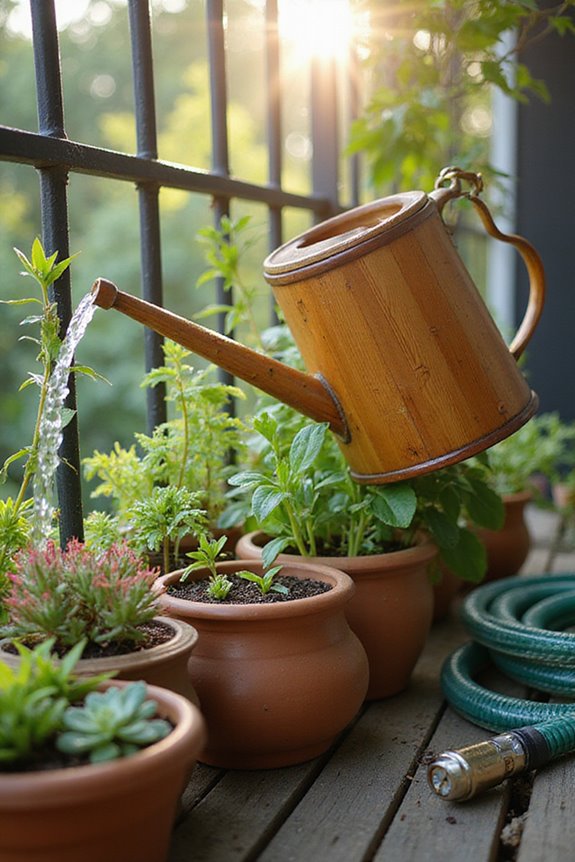
Effective watering techniques are essential for keeping our container gardens thriving. We can choose from various tools and methods to guarantee our plants receive adequate moisture.
- Drip Irrigation: This system delivers water directly to the soil and roots. It includes tubing and emitters, allowing precise control over water distribution.
- Olla Pots: These porous clay vessels can be buried near our plants. They release water slowly, encouraging deeper root growth and reducing watering frequency by up to 70%.
- DIY Solutions: We can repurpose plastic or glass bottles for slow watering. By drilling holes and burying them right-side-up, we can create effective drip systems.
Adjusting for Environmental and Seasonal Factors
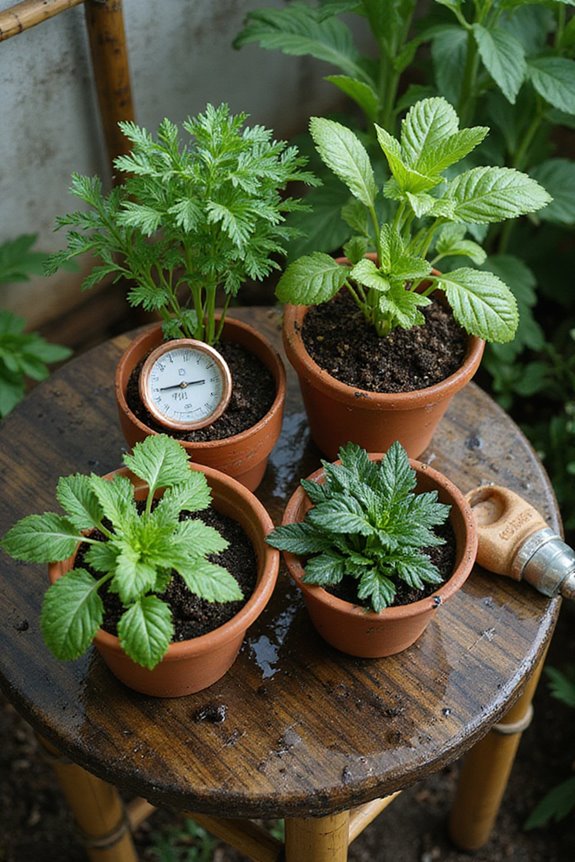
Watering container gardens requires us to adjust our strategies based on environmental and seasonal factors.
- Temperature Considerations: In hot weather, we need to water more frequently due to increased evaporation. Conversely, cooler temperatures in winter mean we can water less.
- Humidity Effects: Low humidity levels speed up moisture loss, so we must check our plants often. High humidity retains moisture longer, allowing for less frequent watering.
- Seasonal Adjustments: During summer, daily watering may be necessary, while in fall, we can taper off as temperatures drop. In spring, we should gradually increase watering to support new growth.
Troubleshooting Common Watering Issues
When we encounter issues with our container gardens, it’s important to identify whether we’re dealing with insufficient or excessive watering. Common symptoms of underwatering include dry soil, wilting, and stunted growth. On the other hand, overwatering leads to root rot and poor yields.
To troubleshoot, we can use moisture indicators like finger insertion to check soil dampness. If it’s dry, we should consider rehydration techniques, like submerging small containers or poking holes in larger ones for gradual watering. Additionally, incorporating drip irrigation systems can help optimize water use and ensure consistent moisture levels.
Also, ensuring our containers have drainage holes is vital. This prevents water accumulation and allows oxygen to reach the roots. By monitoring our plants consistently, we can maintain a healthy balance in our container gardens.
Frequently Asked Questions
Can I Use Tap Water for My Container Plants?
We’ve all wondered about using tap water for our container plants, right? Checking tap water quality is key. Let’s make sure it’s at room temperature and free from harsh chemicals before watering our green friends!
How Do I Know if My Plant Needs More Water?
When we notice leaf droop, it’s time to check the soil moisture. If it feels dry to our touch, our plants likely need water. Let’s stay attentive to keep our green friends thriving together!
What Plants Require More Frequent Watering?
When considering plants that need frequent watering, we might prioritize herb varieties like basil and cilantro, while remembering that drought-resistant plants, such as lavender, typically thrive with less moisture, helping balance our gardening efforts.
Is Rainwater Better Than Tap Water for Container Gardens?
Isn’t it fascinating how rainwater benefits our plants, while tap water drawbacks can harm them? Together, we can choose rainwater for healthier roots and flourishing gardens, nurturing our green spaces with nature’s purest resource.
Can I Water My Plants With Leftover Cooking Water?
Absolutely, we can use leftover cooking water! It’s packed with leftover nutrients that boost plant health. The cooking water benefits our garden by enriching the soil, promoting growth, and retaining moisture more effectively.